Accessories & Services
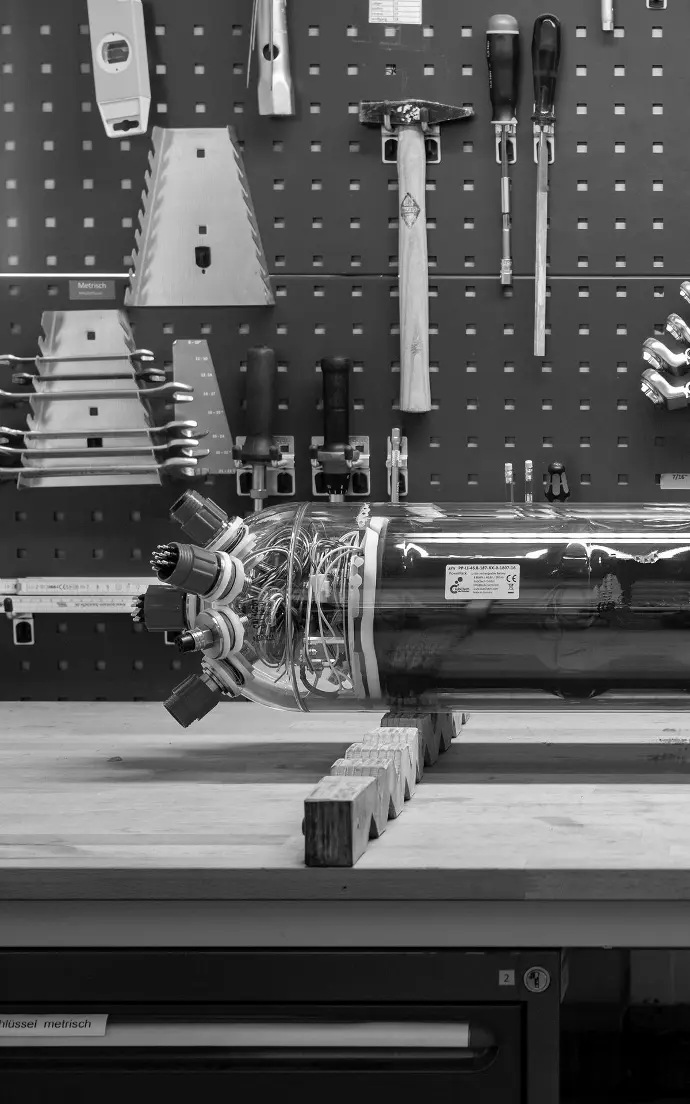
Nautilus Marine Service offeres a broad range of services and accessories to support customization of instrument spheres. Please check out individual model series for details. For the best possible and efficient guidance, Nautilus Marine Service would appreciate it, when a short description/drawing of your application could be provided.
accessoires | overview |
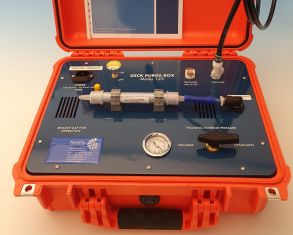
Vacuum pump |
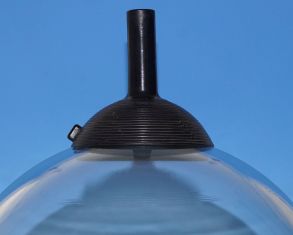
| Deck purge box (pump) that fits vacuum ports, for evacuation of glass housings and to eliminate moisture inside. | |
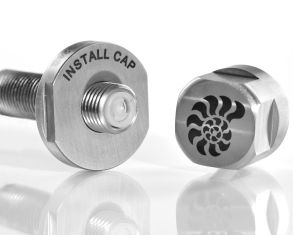
Vacuum port (self sealing) |
| Titanium vacuum port, selfsealing version with 5mm or 7/16“ threaded bolt. Self-sealing vacuum ports in combination with a Deck Purge Box ease the procedure to open and close pressure housings and eliminate any moisture inside the enclosure. | |
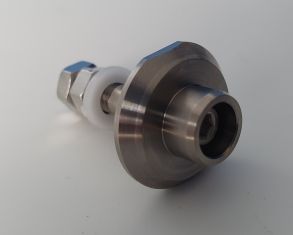
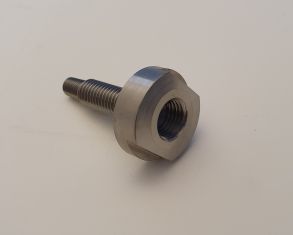
Vacuum port |
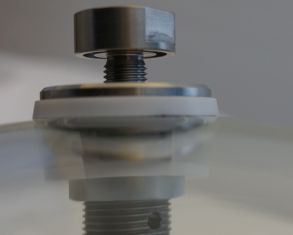
| Titanium vacuum port with single and double face seal and 5mm threaded bolt. | |
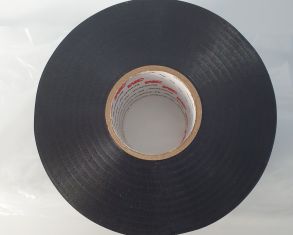
Sealing and protective tape |
| Scotchrap is used to protect the TEROSTAT sealing tape from mechanical damage or from any other negative impact e.g. caused by sea water. Scotchrap Tapes have a 5-year shelf life (from date of manufacturer) when stored under the following recommended storage conditions: Store in a clean dry place at a temperature of approx. 21°C (70°F) and 40 to 50% relative humidity. Good stock rotation is recommended. Shelf-live becomes virtually unlimited when stored cool and dry (15°C / 40% rel. humidity). | |
Manometer |
| Nautilus Marine Service can supply a manometer to quickly check or monitor the status of the vacuum inside the glass housing. The manometer can be bonded anywhere inside the glass enclosure and a protective shell can be modified with a viewing window in this regard. This feature can be especially useful if a last check of the vacuum is required right before deployment and time consuming disassembling efforts of the protective shells is not an option. | |
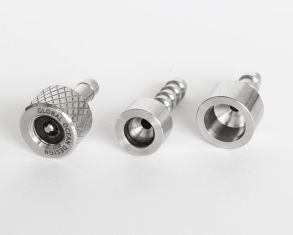
Hose adapter for vacuum parts |
|
| |
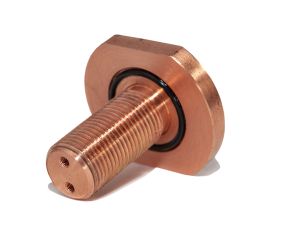
Heatsink |
| Filler plug made of Copper, requires bulkhead connector ports, approx. heat flow in W @deltaT (40@20°, 60@30°, 80@40°, 100@50°). | |
Pressure feedthrough |
| VITROVEX pressure feedthrough (high pressure 1/4" NPT to 1/16" NPT), made of stainless steel AISI316. | |
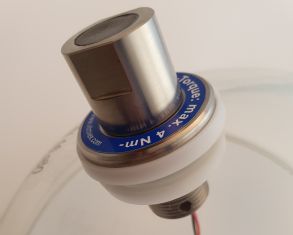
Pressure switch |
|
| |
Flanges |
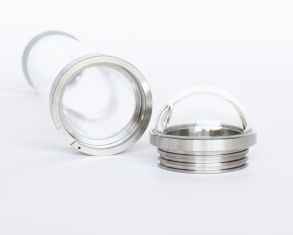
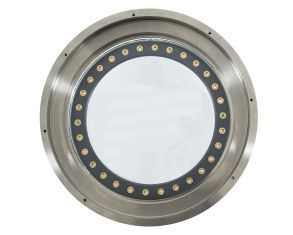
| Flanges provide an alternative solution to open and close spheres. They are often made of Titanium due to similar thermal expansion coefficients. Stainless steel or plastic flanges could also be feasible for short term deployments or shallow water applications. Leak tightness is achieved, similar to any other non-glass housings, by means of o-rings between two flanges. Nautilus Marine Service provides a default flange design and can also manufacture according to customer’s needs. The glass housing is bonded to the flanges using a commercially available adhesive. For customers who like to apply their own flanges to glass housings, Nautilus Marine Service has a bonding instruction available as well as corresponding tools and adhesive. Please note: In general, glass housings are very strong against pressure, but do not have the same qualities against tension or shear or torsion. So, do not install glass housings at platforms where they are subjected to such forces. This is particularly important for housings which have been furnished with metal flanges. Do not use those flanges as mounting support on flexible surfaces. Downloads: Drawing NMS-FLA-Ti-17-I , 3D model (3D) NMS-FLA-Ti-17-I | |
Filler plugs |
| Blanking plugs for additional outputs, even if there is no need for all holes at the time of production. | |
Bulkhead mounting sets |
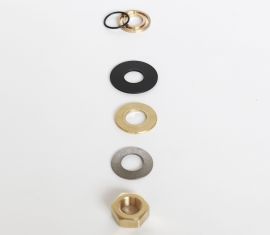
| Bulkhead adaptors offer an additional approach to realize through-wall connections and provide greater flexibility as additional interfaces could be attached proactively and sealed with blanking plugs. Available for circular and low profile connectors. | |
Lubricant |
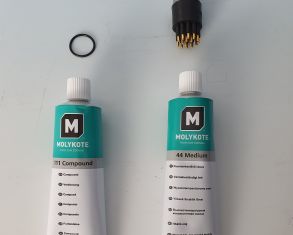
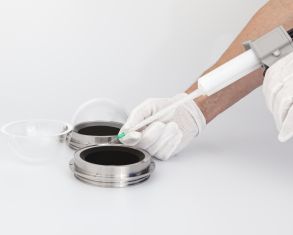
| Molykote Lubricant to grease O-rings and connectors before mating. | |
Mounting Ring |
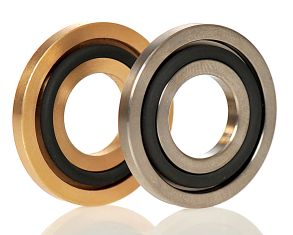
| Mounting rings with or w/o threated inserts which supposed to be fixed (bonded) approx. 25mm below the rim of a corresponding hemisphere. Download Drawing: | |
Bonding Set |
|
| |
Adaptor plates |
| Adapter plates avoid bearing stress for standard connectors. They assure that stress is deducted over a wider area from the connector towards the glass around the edges of the drill hole. | |
Protective shells |
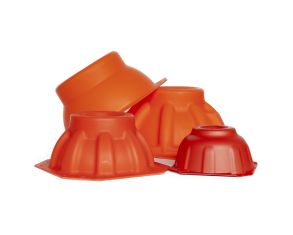
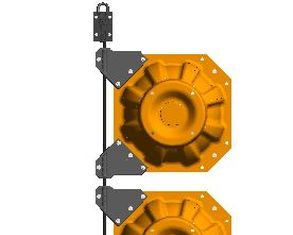
Download Technical note: VITROVEX protective shells | Protective shells for VITROVEX® spherical glass housings are available for impact protection, stowing and ease of handling. They are made of LDPE (low-density polyethylene) in bright orange colour and are neutrally buoyant. Protective shells are offered in smooth or ribbed design. Each protective shell consists of two flanged halves secured by stainless steel bolts with washers and self-locking nuts. Synthetic fiber pads between the glass sphere and the shell absorb shock and retain the sphere in its position. The number of synthetic fiber pads varies with the sphere model. Additional mounting hardware such as Eddygrip/Eddyrope swivelling sphere attachment sets is available to support field installations. Protective shells of ribbed design are often used in moorings or application with a large likelihood for impact whereas smooth protective shells usually used when spheres are mounted directly on underwater equipment such as landers or when the protective shell needs to be modified in order to accommodate (oversized) connectors, transducers, etc. or to provide view holes for cameras, lights etc. respectively. There is no difference in terms of hydrodynamics or net buoyancy between ribbed and smooth protective shells. Technical drawings for protective shells are available in different formats. Please check our download section. Download: Drawing PS-RO_10 , 3D model PS-RO-10 Drawing PS-RO_13 , 3D model PS-RO_13 Drawing PS-RO/RW-17 , 3D model PS-RO/RW-17 Drawing PS-S-17 , 3D model PS-S-17 | |
Mooring system |
| Set of up to five 17” floatation spheres attached to a braided fibre rope (Eddyrope) with swivelling mounting brackets (Eddygrip). | |
Transportation aid |
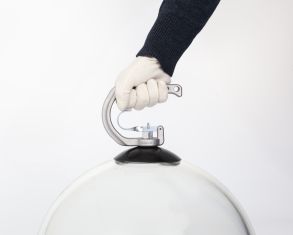
| xperience has shown that hand carrying heavy glass hemispheres could sometimes be challenging. The proposed lifting aid might be helpful in this regard. |